FEATURE STORY
Cover Story
Text by Brook Aster
Photography by Hadija
Virality, race, and classical discipline collide in the work of Thelonious Stokes, an artist operating beyond the gallery.
Text by Brook Aster
Photography by Hadija
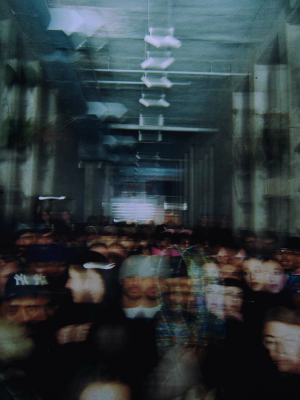
Facing warnings of an Arctic blast and plunging temperatures, dozens of New Yorkers lined up in SoHo outside of 66 Greene on Friday night, braving the cold in anticipation of the multidisciplinary artist Thelonious Stokes’ first-ever publicized performance. For an artist whose practice has long been defined by surprise, interruption, and spontaneity, the simple act of announcing a time and place marked a quiet but meaningful departure from form.
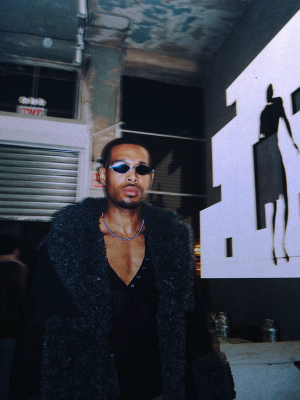
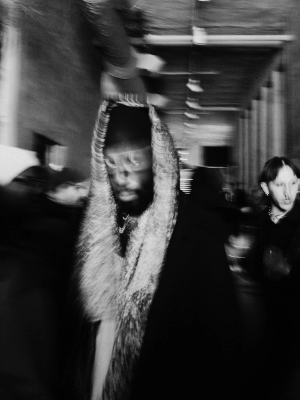
A South Side Chicago native and current resident of Florence, Italy, Stokes is a classically trained painter, multi-instrumentalist musician, and performance artist who has cultivated a global following through staging, recording and posting his unannounced performances in iconic public spaces from the Eiffel Tower to the Brooklyn Bridge to the White House, often capturing the live reactions of unexpectant spectators. Frequently labeled a “viral artist” by publications and self-described as a “performance athlete,” Stokes’ practice aims to collapse the boundaries between sound, movement, visual art, and endurance. Central to his work is an ongoing interrogation of Blackness as a lived and embodied condition, with visible influences from the works of Kerry James Marshall and David Hammons. Though his art has circulated widely online since his teenage years, this evening marked the first time audiences were invited to experience his performance work with advance notice and shared expectation.
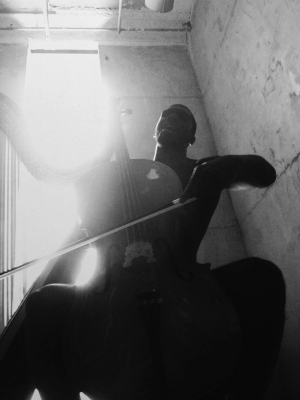
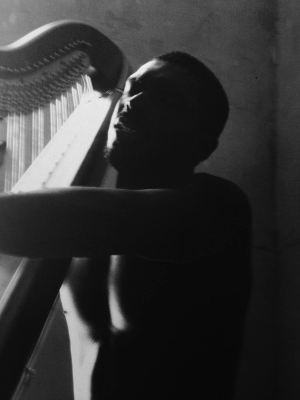
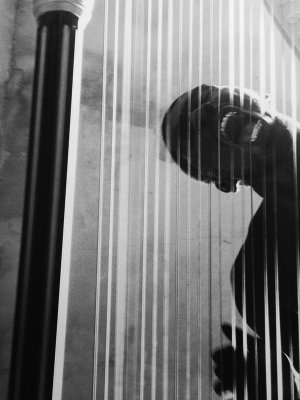
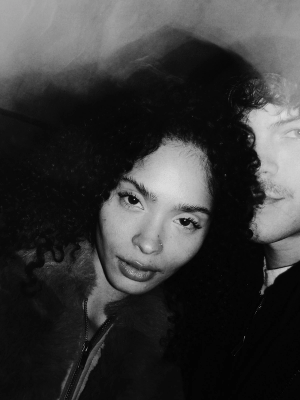
Once the doors opened, 66 Greene quickly filled with a who’s-who of artists and cultural figures. The room hummed beneath the pulse of Detroit techno pioneer Robert Hood, a soundtrack selected by Stokes himself. When the star of the night finally emerged, he advanced through the crowd while blowing a horn between guttural cries and sharp, deliberate movements, physically parting the audience as he moved forward painted head to toe in black. Both confrontational and ceremonial, his entrance demanded participation before a single word was spoken. Upon reaching the stage, Stokes moved fluidly between instruments, first playing the cello, then transitioning to a harp. His operatic vocals rose and fell through the room, at times meditative and restrained, at others raw and forceful. Just as the performance seemed to settle into rhythm, Stokes abruptly shifted the focus outward.
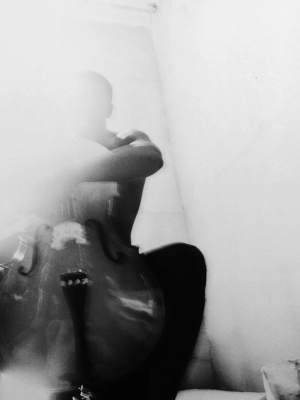
“TO ME, BLACKNESS IS A CONDITION,” HE TOLD THE AUDIENCE. “WHAT IS BLACKNESS TO YOU?”
Responses came tentatively at first, then with growing confidence, as spectators offered personal definitions and reflections. With a final blast of his horn, Stokes ended the exchange as suddenly as it began and exited the stage, leaving the room to find their own answers.